
If you share your home with a cat that never seems to get enough food, you know how stressful mealtimes can be. Some cats cry endlessly near their food bowls, others eat so quickly they throw up minutes later, and a few even try to sneak into food bags or swipe snacks from the kitchen counter. Overeating isn’t just an inconvenience. It can lead to obesity, stomach problems, diabetes, and other health issues that shorten your cat’s life.
One of the most effective tools to manage overeating is an automatic feeder. Unlike a traditional bowl, an automatic feeder allows you to decide exactly how much food your cat gets and when it gets it. This turns mealtime into a controlled, predictable event rather than a free-for-all. But with so many models on the market, how do you know which one is right for your cat?
Let’s walk through the process step by step How to choose the Right Automatic Feeder for a Cat That Overeats.
Why Cats Overeat in the First Place
Cats can overeat for many reasons, and not all of them are simply about being greedy. Some cats eat too quickly because they came from shelters where food was scarce. Others eat out of boredom or stress. Multi-cat households often create competition, so one cat gulps down food before another can reach it. Sometimes, overeating is linked to medical problems like hyperthyroidism or diabetes. If you suspect your cat’s appetite is excessive beyond normal behavior, it’s always smart to check with a veterinarian first.
When health issues are ruled out, what you’re left with is a feeding routine problem. That’s where automatic feeders shine. They don’t just fill your cat’s bowl; they create structure, routine, and limits.
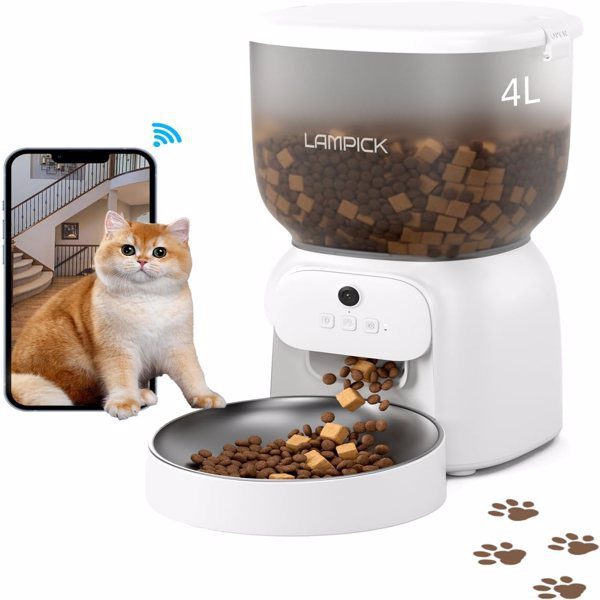
Automatic Cat Feeder With Camera
Keep an eye on your pet and their meals with this Automatic Cat Feeder with Camera. It lets you schedule feeding times, control portions, and watch your cat in real-time through the built-in HD camera. The app-controlled design offers remote access, while voice recording adds comfort during feeding.
What an Automatic Feeder Can Do for Your Cat
Think of an automatic feeder as both a helper and a boundary-setter. Instead of leaving a full bowl that your cat can graze on all day, you can schedule smaller, measured meals. This slows down eating, prevents overstuffing, and reduces vomiting caused by eating too quickly. It also helps cats learn that food will always come at certain times, which cuts down on begging and crying.
For cat owners, feeders bring peace of mind. You no longer need to rush home to feed your cat, worry about early morning wake-up calls, or wonder if your pet sitter gave the right amount. The feeder handles it for you, as long as you’ve chosen the right one.
How to Choose the Right Feeder for an Overeating Cat
When you’re shopping for a feeder, the first thing you need to think about is portion control. If your cat overeats, you need a feeder that allows very precise measurements. Some feeders only dispense large amounts, which won’t help. Look for one that lets you program exact grams or very small cup sizes.
The second factor is meal scheduling. Cats that struggle with overeating usually do better with more frequent, smaller meals rather than one or two large ones. A good feeder should allow you to schedule at least four meals per day.
Food compatibility is also important. If your cat eats prescription food or prefers a specific kibble size, check whether the feeder works with that. Large or odd-shaped kibble sometimes jams feeders, and nothing frustrates a hungry cat more than waiting for food that doesn’t come.
Another issue many cat parents overlook is security. Clever cats can paw at a poorly designed feeder and shake out extra food. Make sure the lid is lockable and the feeder body is sturdy.
Finally, consider convenience for you. A feeder that is impossible to clean will end up unused. Choose one with removable, dishwasher-safe parts and an airtight hopper to keep the food fresh. If you travel or work long hours, a smart feeder with app control and a built-in camera can be a lifesaver.
Further Readings: Harness vs Collar: What’s Better for Daily Walks?
Matching the Feeder to Your Cat’s Personality
Not all cats interact with feeders the same way. If your cat is highly anxious, a noisy machine may scare them. If your cat is curious and mischievous, they may try to break into it. Thinking about your cat’s personality before you buy helps you avoid frustration later.
For example, if you have a fast eater, you’ll want a feeder that allows multiple very small portions each day. If you have more than one cat, you may need a feeder with selective feeding features so that one cat doesn’t steal the other’s portion.
Helping Your Cat Adjust to a New Feeder
Introducing an automatic feeder should be gradual. At first, place the feeder next to the regular bowl so your cat can get used to seeing and smelling it. Then start serving some meals through the feeder while still offering a little food in the old bowl. Once your cat is comfortable, phase out the bowl completely.
Most cats adapt quickly, especially once they realize the machine is now their main food source. Just keep the routine consistent. Cats thrive on predictability, and after a week or two, your overeating cat will wait calmly for the feeder instead of begging you all day.
Extra Tips to Control Overeating
An automatic feeder is powerful, but it works best when combined with other strategies:
- Use puzzle toys or slow-feeding bowls for extra stimulation.
- Play with your cat more often. Mental and physical activity reduce stress eating.
- Weigh your cat regularly to make sure the new routine is helping.
- Stick with high-quality food so your cat feels fuller for longer.
With the right combination of tools and habits, you can manage overeating without constant battles.
Must Read: How to Crate Train a Dog – Step By Step Guide
Conclusion
Overeating in cats can be stressful for both pets and owners. But the right automatic feeder can transform your cat’s eating habits. Instead of endless begging, fast gobbling, or food theft, you’ll have calm, measured meals that support better health.
When choosing a feeder, focus on portion control, scheduling, security, and ease of cleaning. Think about your cat’s unique habits and personality. With the right model, you’ll not only manage overeating but also create a healthier and happier life for your cat—and a more peaceful routine for yourself.
FAQs
1. Can an automatic feeder actually help a cat lose weight?
Yes. By controlling how much food is dispensed and breaking meals into smaller portions, an automatic feeder helps reduce calorie intake. Weight loss should still be supervised by a vet, but feeders make the process easier.
2. How many meals per day should I program for an overeating cat?
Most cats do well with four to six small meals spread throughout the day. This prevents hunger spikes and reduces the urge to binge.
3. Will an automatic feeder work with wet food?
Some models do, but they often require ice packs or cooling features. For long-term weight control, dry food feeders are more reliable and easier to maintain.
4. What if my cat is scared of the feeder at first?
Give them time. Place it near their usual feeding spot and let them sniff it. Start by dispensing food manually and praising them when they approach. Gradual exposure usually removes the fear.
5. Is a smart feeder worth the extra money?
If you’re away from home often or want peace of mind, yes. A smart feeder with camera and app control lets you monitor meals, adjust portions, and check if your cat has eaten—all from your phone.