
Grooming can be a challenge if your pet feels anxious around brushes, clippers, or nail trimmers. But it doesn’t have to be stressful. With patience and the right approach, you can turn grooming into a calm, even enjoyable routine. The key is slow introductions, positive reinforcement, and creating a safe environment.
Know About Your Pet’s Fear
Before you begin, pay attention to your pet’s body language. Nervous pets may hide, tremble, lick their lips, or pull away. Some may even freeze in place. These signals mean your pet feels anxious. Respecting them is important. If you push too hard, grooming will become something your pet dreads.
Take note of specific triggers. Is it the buzzing of clippers, the touch of their paws, or the sight of a brush? Knowing what causes stress helps you create a plan to introduce tools step by step.
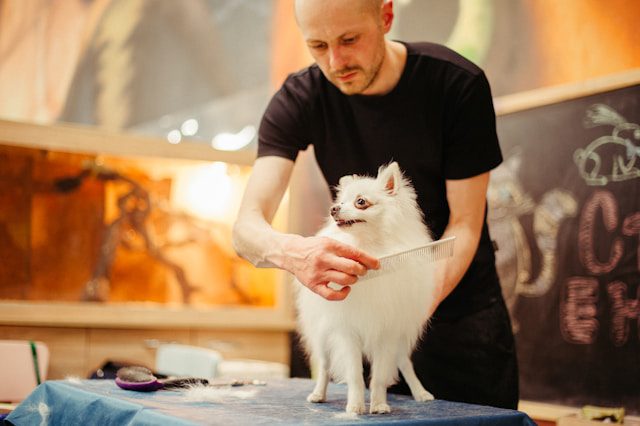
Tip 1: Introduce Tools Slowly
Start With Sight and Smell
Place grooming tools nearby while your pet is calm. Allow them to sniff and inspect without pressure. Reward any calm interaction with gentle praise or a treat. This builds a positive association.
Touch Without Pressure
When your pet is relaxed, lightly touch them with the tool without using it. For example, rest a brush against their fur but don’t brush yet. Keep these interactions short; just a few seconds at first.
Gradual Progression
Introduce one tool at a time. Start with the least intimidating option, such as a soft brush, before moving on to clippers or nail trimmers. Let your pet gain confidence with each step before moving forward.
Tip 2: Create a Calm Environment
Quiet and Comfortable
Choose a quiet room without distractions. Turn off the TV, keep other pets away, and use a soft towel or mat so your pet feels secure.
Stay Relaxed
Pets pick up on your emotions. Speak softly, move slowly, and avoid sudden gestures. A calm presence reassures your pet.
Short, Frequent Sessions
Keep early sessions short; two to five minutes is enough. Gradually extend them over time. Short, consistent practice works better than one long, stressful attempt.
Tip 3: Use Positive Reinforcement
Reward Calm Behavior
Every small success matters. Reward your pet with treats, petting, or praise whenever they stay calm. Even simple actions like sniffing a brush or letting you hold a paw deserve recognition.
Pair Grooming With Fun
Link grooming to something enjoyable. Follow a short brushing session with playtime or a favorite treat. Over time, your pet will see grooming as part of a positive routine.
Track Progress
Notice what motivates your pet most: food, praise, or affection. Use that to guide your approach and celebrate small wins along the way.
Tip 4: Gradually Introduce Noisy Tools
Desensitize to Sound
If clippers are needed, start by turning them on at a distance without touching your pet. Let your pet hear the sound and reward their calmness.
Move Closer Slowly
In later sessions, bring the clippers closer. Only touch the fur when your pet is calm. If they show stress, pause and try again another day.
Combine With Calm Touch
Once your pet tolerates the sound, pair it with gentle brushing or light clipping. Go slowly and keep rewarding cooperation.
You May Find Helpful
- Why is My Cat Urinating on the Bed?
- How to Get a Cat to Use an Automatic Litter Box
- Harness vs Collar: What’s Better for Daily Walks?
Conclusion
Introducing grooming tools to a nervous pet takes time, patience, and care. By moving slowly, creating a calm space, and rewarding positive behavior, you can build your pet’s trust and confidence. Over time, grooming will shift from a stressful chore to a bonding routine that benefits both you and your pet.
FAQs
1. How long should grooming sessions last?
Begin with 2–5 minutes and extend gradually as your pet adjusts.
2. How often should I groom my nervous pet?
Short daily sessions are best. Focus on creating positive experiences instead of trying to finish everything at once.
3. What if my pet reacts aggressively?
Stay calm and stop immediately. Only resume when your pet is relaxed. Consistency and patience matter most.
4. Can I groom my pet alone?
Yes, but having a second person can help keep your pet secure and make sessions easier.
5. When should I consult a professional?
If your pet shows extreme fear, bites, or scratches, seek help from a professional groomer or veterinarian. They have the skills to handle nervous pets safely.